.png)

BOTOX cosmetic
onabotulinumtoxin a injection
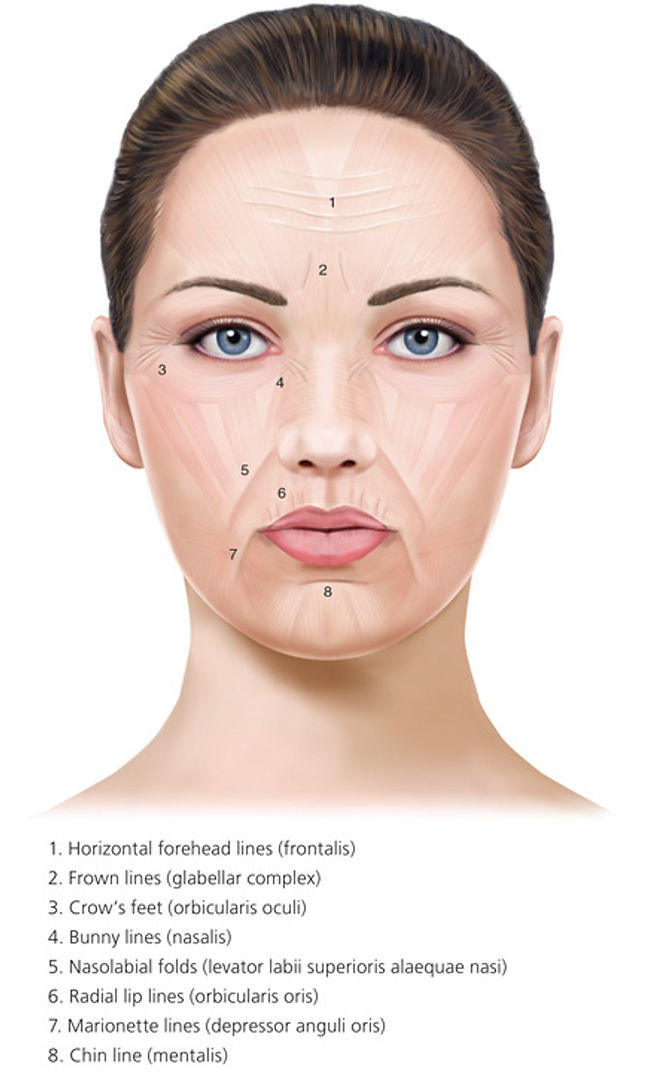
One way to treat the numerous lines and wrinkles found on the face caused by everyday muscle actions is with Botox. As we age, our skin gets thinner and the appearance of these lines become more pronounced.
Botox is a simple, non-surgical, FDA-approved treatment that can temporarily smooth moderate to severe frown lines between the brows in people 18 to 65 years of age.
HOW CAN BOTOX HELP ME?
At ENVY Med Spa we perform Botox treatments for Arcadia and Los Angeles area residents to block the nerve impulses in these small muscles. Treatments are relatively painless and they work to visibly smooth and soften moderate to severe frown lines.
Within days of these 10-minute treatments (which involve a few tiny injections), there’s a noticeable improvement in the moderate to severe frown lines between the brows, which can last for several months. Treatments can be repeated as necessary for maintenance.
ALLERGAN RECOMMENDED DOSING
Every individual is unique and results may vary from person to person. A consultation appointment is needed to assess your face and goals. The FDA has approved a certain amount of BOTOX Cosmetic to temporarily treat moderate to severe lines in 3 different areas. Dosing is all about getting the results you want by temporarily softening these lines. In clinical trials, results lasted 4 months in frown lines with the FDA approved dose.
-
For the crow’s feet area, your specialist will inject 3 areas of the muscle that frames the side of the eye. This will be repeated on the muscle that frames the other eye.
-
24 units (12 units each side)
-
-
For the frown lines area, your specialist will administer 5 injections into the muscles between your brows and in your forehead.
-
20 units
-
-
For the forehead lines area, your specialist will administer 5 injections into a muscle in your forehead.
-
20 units
-
WHAT TO EXPECT DURING TREATMENT
Botox is a quick, 10-15 minute treatment. During your consultation, the aesthetic specialist will discuss your treatment goals and safety. Then, you will have a facial assessment to determine the appropriate treatment areas for you. Some people say that the injections feel like a pinch. Your specialist may use ice or a topical numbing cream to enhance comfort.
WHAT TO EXPECT AFTER TREATMENT
Treatment requires minimal downtime. You can return to your daily routine immediately after you leave your appointment. You may begin to notice results within 24 to 48 hours, with results lasting up to 4 months for moderate to severe frown lines. Results vary from patient to patient, so your aesthetic specialist will plan your next appointment based on your aesthetic goals.
DYSPORT VS. BOTOX: WHAT'S THE DIFFERENCE?
Dysport and Botox both have cosmetic uses. But what is the difference between these botulinum toxins? ·
Medically reviewed by https://www.drugs.com/support/editorial_policy.html#drugs-com Last updated on Apr 11, 2019.
Botox is the brand name for a specific type of botulinum type A toxin, called onabotulinumtoxinA (ONA). Dysport is the brand name for another type A botulinum toxin called abobotulinumtoxinA (ABO). Botox was first approved for cosmetic use in 2002, and Dysport in 2009.
The main differences between Botox and Dysport are:
-
They both work by blocking nerve signals to the muscles, but are manufactured differently and their resulting nontoxin proteins cause them to have different potencies and possibly differences in their duration or onset of effect.
-
Most studies have used a ratio of 2.5:1, meaning 25 units of Dysport have approximately the same action as 10 units of Botox. Some studies have suggested that Dysport works quicker, lasts longer and hurts less than Botox; however, these results should be interpreted with caution and in some instances, the trials were sponsored by the manufacturer of Dysport.
-
Both Dysport and Botox are FDA approved for cosmetic indications and to treat cervical dystonia, upper limb spasticity and lower limb spasticity (patients older than 12 years Dysport; patients older than 2 years Botox). Botox is also approved to treat a chronic migraine, excessive sweating, bladder dysfunction and urinary incontinence associated with a neurological condition blepharospasm and strabismus.
-
Even though Botox and Dysport are both type A botulinum toxins, their non-toxin protein content is different due to differences in their manufacturing. This means that there are several similarities but slight differences between the two products.
IS THE DOSAGE OF DYSPORT THE SAME AS THAT FOR BOTOX?
No. All dosages are product specific and are not interchangeable.
Botox Cosmetic is supplied in single-use vials containing either 50 or 100 units of ONA. The vial is diluted with sodium chloride before use and intended to be used on only one person. The maximum cumulative dose of ONA should generally not exceed 360 units, in a 3-month interval.
Botox multi-use vials (for indications other than cosmetic) contain either 100 or 200 units of ONA per vial, which is diluted with 0.9% sodium chloride to get a predetermined unit per ml dosage. The left-over reconstituted solution can be kept in the fridge but must be used within 24 hours.
Dysport vials contain either 300 or 500 units of ABO per vial and must also be diluted before use. Dysport is only for single use (one injection session for one patient) and reconstituted solution should be kept in the fridge and thrown away after 24 hours if not used.
The potency units of any botulinum toxin for injection is specific to that particular preparation and assay method utilized. 50 units of Botox does not equal 50 units of Dysport. The products indication-specific dosage and administration recommendations should always be followed. The lowest recommended dosage should always be used when first using a botulinum toxin product.
IS DYSPORT MORE EFFECTIVE THAN BOTOX?
Studies comparing Dysport to Botox have mostly yielded conflicting results. One trial, sponsored by the manufacturer of Dysport, demonstrated that Dysport worked for longer than Botox in participants with severe frontalis lines (horizontal forehead lines). In this trial, a unit-to-unit ratio of 2.5:1 (ie, 25 units of Dysport was considered equivalent to 10 units of Botox) was used. Another trial showed no difference in the duration of action of the products; however, they did find that complete efficacy was more likely to be achieved with Dysport (90% vs 75%). A further trial found Dysport worked quicker and was significantly less painful on injection than Botox. These results should be interpreted with caution.
Botox has more FDA approved indications than Dysport
Dysport is FDA approved for the treatment of glabellar lines, cervical dystonia, upper limb spasticity, and lower limb spasticity (in adults and pediatric patients over the age of 2).
Botox Cosmetic temporarily improves the appearance of moderate to severe frown lines and lines around the eyes (crows feet) in adults over the age of 18.
Botox is indicated for bladder dysfunction (overactive bladder and urinary incontinence associated with a neurological condition (such as spinal cord injury, Multiple sclerosis), chronic migraine (≥15 days per month with headache lasting 4 hours a day or longer), upper and lower limb spasticity, primary axillary hyperhidrosis (excessive sweating), blepharospasm and strabismus and cervical dystonia. For some indications, patients must be older than 12 (lower limb spasticity) but for others, it is 18 (primary axillary hyperhidrosis).
